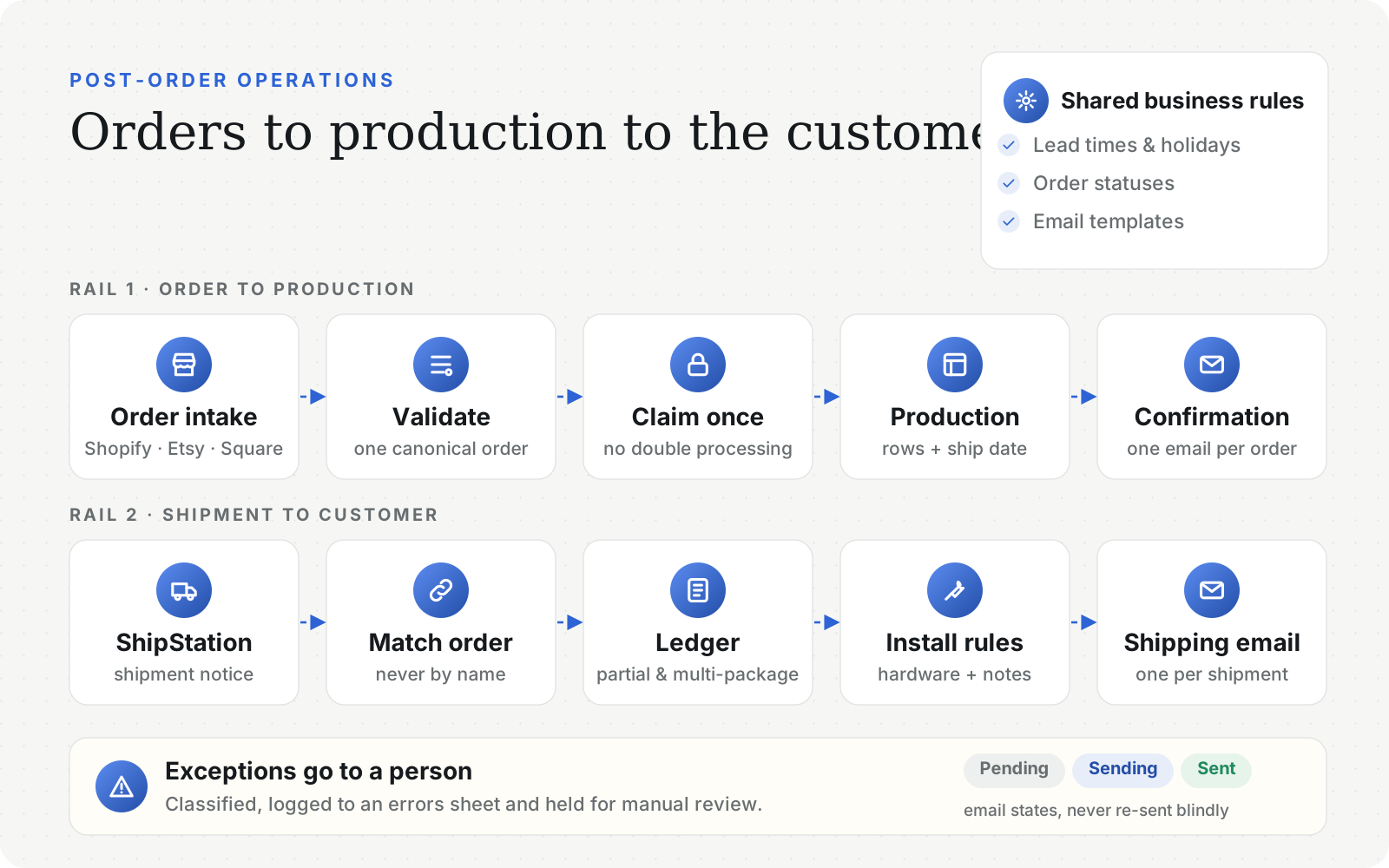
Orders arriving through Shopify, Etsy, and Square can create fragmented data, repetitive updates, and manual coordination across production, customer communication, shipping, and exception handling. I built this system so those moving parts operate as one connected system rather than a collection of separate tasks.
From multi-channel orders to one coordinated operating system.
A post-order operating system built for a custom furniture manufacturer, connecting multi-channel orders with production, customer communication, fulfillment, and exception handling.
See the real build ↓The system captures and standardizes incoming orders, creates a centralized production record, coordinates customer updates and fulfillment, and routes exceptions for human review. Automation handles repeatable execution while people remain responsible for decisions that require judgment—creating an operational structure designed to be more consistent, visible, and scalable.
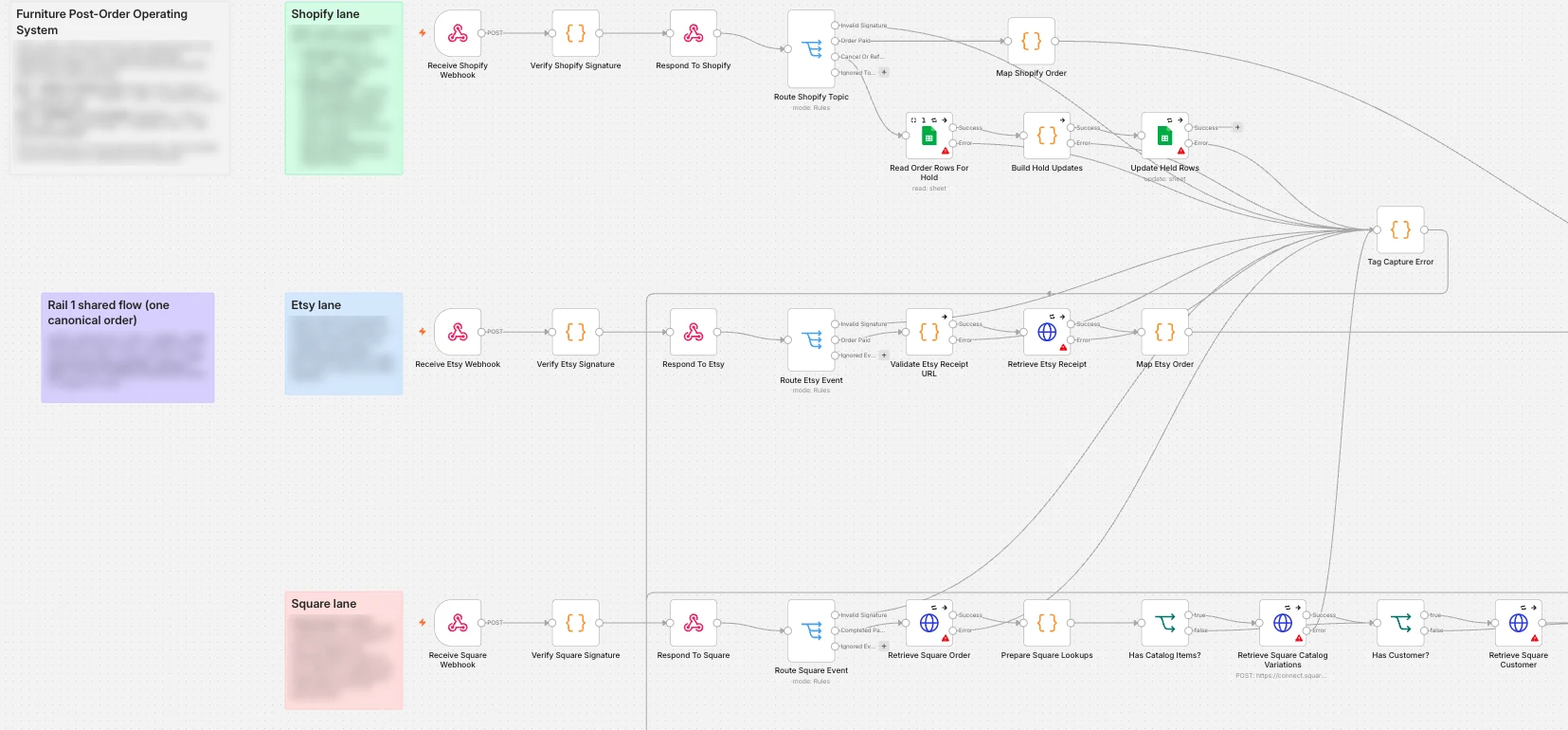
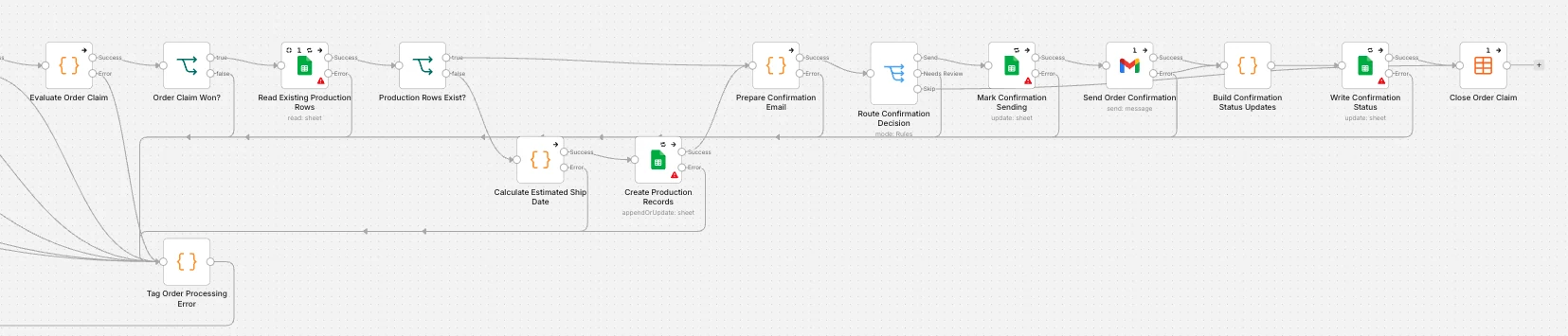
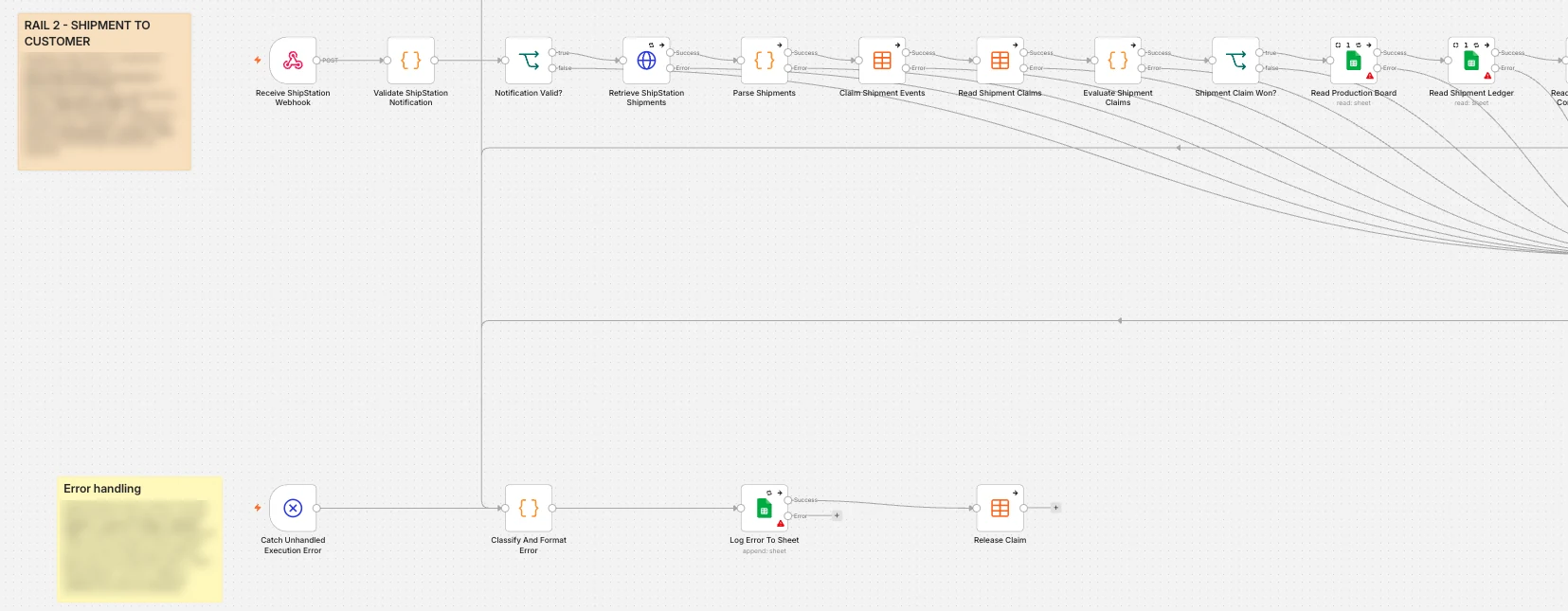
Cropped straight from the editor it was built in. Click any canvas to inspect it full size.
Three sales channels, verified before anything moves.
Shopify, Etsy and Square each arrive through their own lane. Signatures are verified and each platform gets an immediate response. A cancellation or refund puts the order on hold and holds any unsent emails, without touching the columns the team owns.
One canonical order, processed exactly once.
Every channel converges on the same path: business rules from a config sheet, validation, then a claim so a repeated event can't be processed twice. Production rows and an estimated ship date are created, and the confirmation email moves through Pending, Sending and Sent. A message left in Sending is flagged for review, never re-sent automatically.
Shipments matched to orders; failures routed to people.
ShipStation notifications are matched to the right order, never by customer name, and logged per shipment, including partial and multi-package shipments. Expected failures are tagged where they happen, logged to an errors sheet, and released. Temporary errors retry automatically; business errors go straight to manual review.
Installation rules decide what the customer hears.
Before a shipping email goes out, installation and hardware rules are applied. Each shipment gets exactly one email, tracked through the same send states as order confirmations.
Stage: Client build · Pre-launch. Built for a custom furniture manufacturer and not yet live. Outcomes represent design objectives rather than measured results.